
Futures Trading, the Bybit App, and the Small Habits That Keep Your P&L Alive
septiembre 30, 2025Why a Desktop Multi‑Asset Wallet with Built‑in Exchange Might Change How You Trade
octubre 15, 2025Whoa! I know—that headline sounds dramatic. Really? Yes. But hear me out. Browser extension wallets are everywhere now, and they feel effortless. Yet a lot of users still get burned. My instinct said there was a pattern. Initially I thought it was just phishing. Actually, wait—let me rephrase that: phishing is part of it, but not the whole story.
Here’s the thing. Most folks treat an extension like a simple app. They install, set a password, and start swapping. That first impression is deceptive. On one hand the UX is wonderfully smooth—on the other hand, that smoothness masks several attack surfaces that are subtle and persistent. Something felt off about how many people trust an icon in the toolbar with millions of dollars of value. Hmm… I mean, would you hand your wallet to a stranger in a coffee shop? Probably not.
Okay, so check this out—browser extension wallets sit at a weird crossroads. They need access to web pages (to sign transactions), they store sensitive keys, and they interact with a constantly changing browser environment. Those three factors combined make them very attractive targets. Simple mistakes compound. For example, insecure automatic approvals, overbroad permissions, malicious third-party scripts, and credential leakages from other compromised extensions. It’s messy. And very very important to watch for.
What actually goes wrong (and how to stop it)
First, let’s break down the usual failure modes. Phishing is obvious—spoofed websites, fake pop-ups, social-engineered signatures. But there are also sneaky elements. Malicious extensions with high privileges can read or intercept pages. Cross-extension interactions can leak data in ways users don’t anticipate. Browser updates and third-party integrations sometimes change security postures overnight. On top of that, people reuse passwords, store seed phrases in plaintext, or take screenshots that live forever in cloud backups. Not great.
Here’s a practical checklist I use when I evaluate a wallet extension. It’s not perfect. It does help catch a lot of common problems though.
– Check the extension’s origin and developer reputation. Small dev teams can still be trustworthy, but vet them.
– Review permissions requested during install. If it asks to read all websites, pause. Really pause.
– Prefer hardware-integration features for large holdings. It adds friction, but it buys safety.
– Use separate browser profiles for DeFi activity, not your everyday browsing. This isolates risk.
– Never paste your seed phrase into a textbox or upload it as a screenshot. Ever.
My own rule-of-thumb: treat your extension like a vault with a thin glass wall. It’s secure—but the glass breaks if you’re careless. On one hand I’m biased toward usability; on the other hand, I’m conservative with funds. There’s a tradeoff. I once had a near-miss when a suspicious site triggered a popup that looked identical to my wallet’s confirmation modal. I almost approved gas for a token transfer. Luckily I caught it. That moment changed how I use extensions—very much so.
Transactions are tricky. Users often assume the UI will call out malicious actions. But some exploits are legal-feeling transactions that, once signed, allow a contract to drain tokens. So read the details. In practice few people do. Hmm… the cognitive load is high. And honestly, that part bugs me.
Now let’s talk permissions and origins a bit more analytically. Extensions run in browser contexts that are not sandboxed like native apps. That means they inherit a bunch of browser-level privileges. Initially I thought permission prompts were sufficient. But then I realized many prompts are confusing or ignored. People click through. On the other hand, browser vendors are improving prompts and restricting APIs, though actually those changes lag behind threat actors. It’s a cat-and-mouse game.
One concrete mitigation: use wallets that support domain binding or per-site approvals. If a wallet allows you to approve only specific contract interactions for a given dApp, use that. Don’t just grant blanket access. Also, regularly audit and revoke token approvals that you no longer need. It’s tedious, sure. But it’s effective. (oh, and by the way… this step is often skipped)
Another reality—updates and forks happen fast. A wallet you trust today could change hands or ship a risky update tomorrow. That’s why extension source transparency matters. Open-source code, frequent audits, and a clear update history reduce risk. Still, nothing is foolproof. Initially I thought «open-source equals safe» but then realized that open code only helps if someone actively watches it. Many projects are open-source but under-reviewed. So don’t fall into false comfort.
Let me be practical about daily habits. Use a dedicated wallet for high-frequency trades and a cold storage for long-term holdings. Sounds obvious. But many people keep everything in one place. My recommendation: small, hot-wallet for gas and trades; hardware or multisig for significant assets. If you’re using a browser extension as your primary interface, pair it with a hardware device when possible. It adds a confirmation layer that can’t be spoofed by a web page.
When choosing a wallet, I look for several signals: active maintainer responses, security audits, community adoption, permission granularity, and hardware compatibility. I’m biased toward wallets that provide clear recovery and backup guidance. If the onboarding is unclear, that’s a red flag. Also, check the distribution channel—official browser stores with verified developer pages are safer than sideloaded packages. Still, store verification is not a guarantee. Scammers have managed to slip fake extensions into stores before.
There’s one more subtle attack vector: social engineering via customer support or blog posts. Scammers impersonate official handles and convince users to export private keys. I’ve seen clever campaigns that mimic official UI language. So verify support channels, and never disclose seed phrases. Ever. Seriously? Yes. Seriously.
If you want a simple next step: try setting up a fresh browser profile just for DeFi. Install only your wallet extension there. Disable other extensions. I know—sometimes that feels extreme—but the isolation drastically reduces cross-extension leakages. Plus it declutters your signing prompts so you can actually read them. You can also consider privacy-focused browsers or containerization tools to add layers of defense.
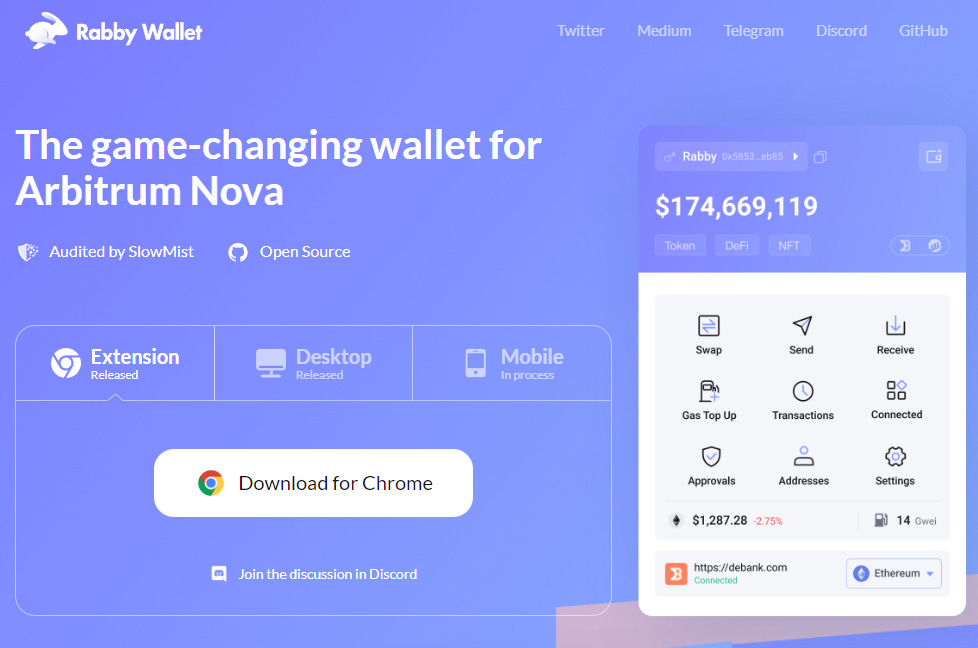
For users who are comfortable installing an extension, but want stronger guarantees, consider wallets that emphasize least-privilege design and offer downloadable clients or native apps as alternatives. One wallet I recommend checking out offers a polished extension experience and clear security docs—if you want to try it, the download link is here: https://sites.google.com/cryptowalletextensionus.com/rabby-wallet-download/ (I’ve messed with it a bit; it’s user-friendly and sensible about permissions). Don’t interpret that as endorsement for all your funds—do your own vetting.
Common questions and plain answers
Q: Can a malicious website drain funds just by visiting?
A: Not directly. But it can prompt a signature or trick you into approving a transaction. A malicious site might propose a seemingly benign signature that actually grants contract approvals. So, never sign transactions without checking the details. Keep autopilot off. Somethin’ as small as an approval can be dangerous.
Q: Is hardware wallet integration worth the hassle?
A: For significant holdings, yes. Hardware adds a physical signing step that web pages cannot override. For day-to-day play-money, it may feel cumbersome. On one hand, convenience wins many users. On the other, hardware prevents many of the browser-based compromises that lead to big losses. Choose based on the risk to your assets.
I’ll be honest—I don’t have perfect answers for every emerging exploit. No one does. The landscape changes fast. But some habits reliably reduce risk: compartmentalize, minimize approvals, use hardware when possible, and treat every signature like cash. That mindset helps.
So what should you feel after reading this? A little uneasy, probably. That reaction is healthy. It motivates better practices. Take one small step today—segment your wallet usage or audit approvals—and build from there. Keep learning. Keep skeptical. And yeah, check things twice. Or thrice. Life online moves quick, and so do the bad actors. But measured, simple defenses win more often than you’d expect.
